Dog Nose Print Tattoo Ideas (and How to Get a Clean Print)
By Nose Print Co. ·
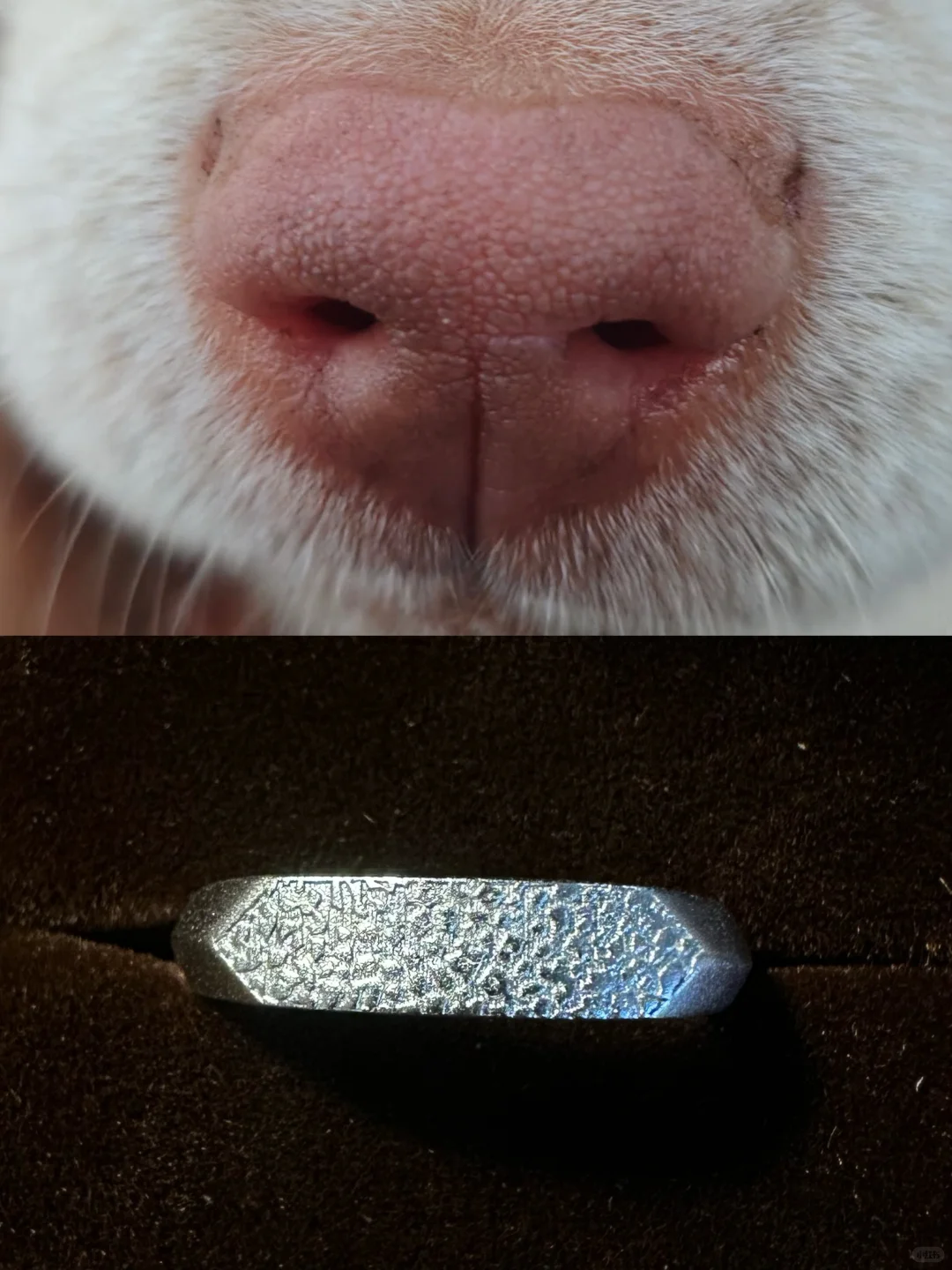
A dog nose print tattoo uses your dog's real nose print as the design, usually as a small piece on the wrist, forearm, ankle or behind the shoulder, sometimes with their name, dates, a paw print or a heart. The secret to a good one is starting with a clean, high-contrast print that your tattoo artist can scale and simplify.
Why a nose print?
Paw prints are lovely, but many dogs of a similar size leave paw prints that look much alike. A nose print is different: the pattern of ridges and creases on each dog's nose is individual to that dog, as we explain in are dog nose prints unique. That makes it a quietly personal design. To most people it's an interesting shape; to you, it's unmistakably your dog.
Placement ideas
- Inner wrist. The classic choice. It's small, easy to glance at, and a nose print fits the space naturally.
- Forearm. Gives the artist more room, which helps if you want a larger print with clearer ridge detail or added text.
- Ankle or top of the foot. Discreet and easy to cover, though skin in high-movement areas can be harder to keep crisp, so ask your artist about it.
- Behind the ear or the back of the neck. Tiny and personal, best suited to a simplified outline.
- Over the heart or on the ribs. A popular spot for memorial pieces.
- Shoulder blade. Good if you want a larger design that combines the nose print with other elements.
Style ideas
A single nose, actual size
The simplest version: your dog's nose print at its true size, in black ink. Big-dog noses suit this especially well because there's more room for the pattern to read clearly.
Nose print with a name or dates
Adding a name underneath in fine script, or a pair of dates for a memorial piece, turns the print into a dedication. Some people use their dog's nickname or a word they always said to them.
Nose and paw print together
Pairing the nose print with a single paw print, or a short trail of paw prints, tells people instantly that it's a dog tattoo while keeping the nose as the personal detail.
Heart outline
Many dog noses already have a loosely heart-like shape. Some artists lean into it by framing the print with a thin heart outline, or by letting the nostrils form the top curves of a heart.
Fine line
Fine-line work suits nose prints because it can trace the outline and main creases delicately. The trade-off is that very small, very fine details are harder to hold, so this is a conversation to have with your artist.
Multi-pet designs
If you share your life with more than one dog, or a dog and a cat, overlapping or side-by-side nose prints make a lovely family piece.
How to capture a clean nose print for a tattoo
Your artist will usually work from a clear image, which they turn into a stencil. You can give them a photo or an ink print. Our step-by-step guide on how to take a dog nose print covers both in detail, but the key points are:
- Ink print: use a non-toxic, water-based ink pad, dab it lightly on a clean, dry nose, and press smooth white paper gently against it. Lift straight off. Expect to do a few; the second or third is usually the clearest.
- Photo: soft daylight, flash off, straight on, with the nose filling most of the frame. Take lots and keep the sharpest.
- Scan or photograph the ink print flat, in even light, so the artist gets a crisp, high-contrast image.
- Send the original file, not a screenshot or a version compressed by a messaging app.
Ink prints often translate more easily into a stencil because they're already black on white. A photo can carry more detail, but the artist will need to redraw it as line work.
Talking to your artist about the fine detail
A real nose print is full of tiny ridges. Tattooing every single one at small sizes isn't always realistic, so go in ready to talk about it:
- Bring a few versions. Your best ink print, your best photo, and any you're unsure about.
- Ask how big it needs to be for the ridge pattern to read clearly, both now and years from now.
- Discuss simplification. Many artists keep the outline, nostrils and main creases, then suggest the finer texture rather than tracing every line.
- Look at their previous work, especially any fine-line or small detailed pieces that have healed.
- Ask to see the stencil before they start, and check it still feels like your dog's nose.
Whatever you choose, use a licensed artist working in a licensed studio. Rules differ between states; in NSW, for example, a tattooist licence is required to perform body art tattooing. Check what applies where you live.
A tattoo, jewellery, or both
Not everyone wants a tattoo, and some people want the print in more than one place. The same ink print or photo you bring to your artist can also be engraved onto a ring, pendant or bracelet. If that appeals, you can see what's possible in our nose print jewellery collection. We send a proof before anything is engraved, so you can check the print looks right.
However you choose to carry it, a nose print is a small, lasting way to keep your dog close.
Quick answers
Where is the best place for a dog nose print tattoo?
Is an ink print or a photo better for a nose print tattoo?
Can every ridge of my dog's nose be tattooed?
Can I get my dog's nose print as jewellery instead of a tattoo?
Their nose, in sterling silver
Send us a clear photo and we trace the print by hand, email a proof, then engrave.


Pet Nose Print Bracelet
Hand-Engraved 925 Silver


Pet Nose Print Pendant
Single or Double-Sided 925 Silver


Cat Nose Print Ring
Hand-Engraved 925 Silver Keepsake


Dog Nose Print Ring
Hand-Engraved Personalised Keepsake